Sleep Difficulties

For many women, difficulties and disturbances in sleeping start during their menopause journey.

For women who have struggled with sleep before perimenopause and menopause, they may find that their sleep difficulties gets worse during this time.1

You may wake up frequently at night and wake up early. You may have trouble falling asleep. After falling asleep, you may struggle to stay asleep (that is, you may wake up and have difficulty falling back to sleep).

So, women may have poor quality sleep, not enough sleep (insufficient) and/or wake up feeling very tired and not refreshed (non-restorative sleep).

Sleep difficulties during perimenopause and menopause can be the result of different factors.

Oestrogen levels swing or fluctuate while trending downwards (towards lower levels), and progesterone levels steadily drop during perimenopause.

Low oestrogen levels affects key regions of the brain including the hypothalamus which is responsible for sleep – this then has an effect on sleep. As progesterone levels become less and less, this affects areas of the brain (like the basal forebrain) which also has a direct impact on sleep.

Women may also experience hot flushes during perimenopause and menopause. Many studies suggest a significant link between hot flushes and sleep difficulties.

Many women also experience psychological changes such as depression and anxiety, especially during perimenopause, which may also lead to difficulties sleeping.

In their menopause journey, women often do not tell their doctors or healthcare providers about their difficulties sleeping.

If women have sleep difficulties and also have other medical conditions like obesity or sleep apnoea (when your breathing stops and starts while you sleep), or are experiencing stress in their work lives or personal relationships; doctors and healthcare providers may automatically assume that their sleep difficulties are due to these medical conditions or to stress. However, for many women, persistent (chronic) sleep disturbance and difficulties start with perimenopause and menopause, and it is important to tell your doctors or healthcare providers about this.
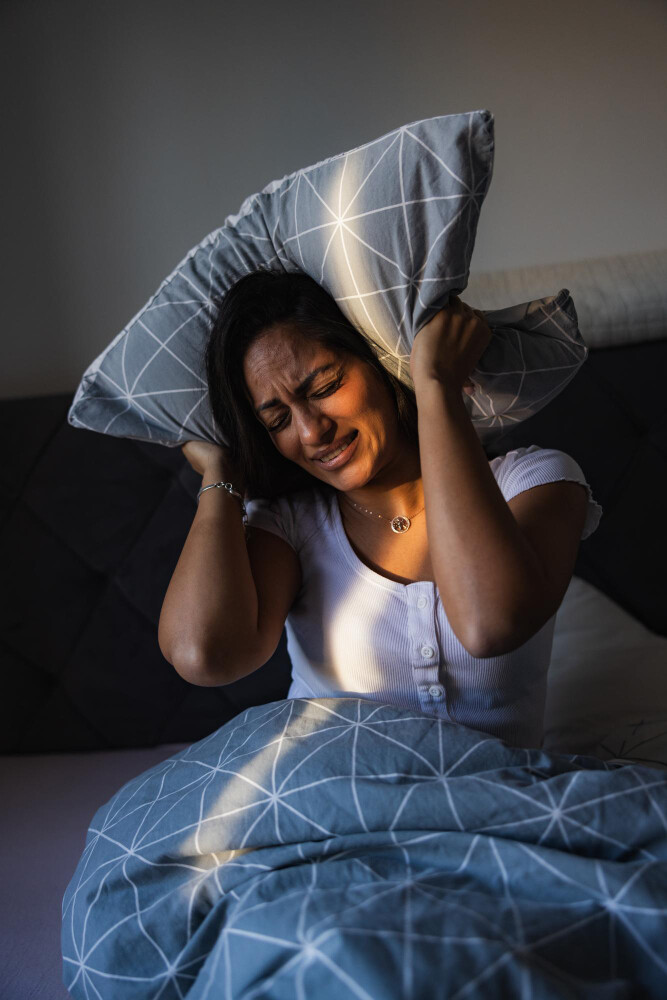
Sleep disturbance can impact your quality of life. Shorter sleep and poorer quality of sleep are linked to increased risk of cardiovascular disease, as well as negative effects on mental health. For more information.

There are various causes of sleep difficulties and disturbances during perimenopause and menopause. Therefore, there are different possible treatment options for trying to address the poor sleep that many women may experience.

There are pharmacological options, including hormone replacement therapies and non-hormone treatment options (like melatonin). There are also psychological – such as cognitive behavioural therapy for insomnia- and self management approaches that have been shown to be help with sleep difficulties. You should talk with your doctor or healthcare provider about the different options that may help address your sleep difficulties.

My Menopause SA

Evidence-based menopause information for South African women.

Page last reviewed: 1 March 2026
Next review due: 1 March 2027

Back to Symptoms

All Symptoms

Footnotes

1 Some studies report that sleep symptoms tend to stabilise in the post menopausal phase. ↩

Baker, F. (2023). Optimizing sleep across the menopausal transition. Climacteric, 26, 198-205. https://doi.org/10.1080/13697137.2023.2173569

Baker, F., De Zambotti, M., Colrain, I., & Bei, B. (2018). Sleep problems during the menopausal transition: Prevalence, impact, and management challenges. Nature and Science of Sleep, 10, 73-95. https://doi.org/10.2147/nss.s125807

Baker, F., Lampio, L., Saaresranta, T., & Polo-Kantola, P. (2018). Sleep and Sleep Disorders in the Menopausal Transition. Sleep Medicine Clinics, 13 3, 443-456. https://doi.org/10.1016/j.smrc.2018.04.011

Bertisch, S., & Joffe, H. (2025). Sleep and menopause. Menopause, 32 8, 727-729. https://doi.org/10.1097/gme.0000000000002585

Carmona, N., Solomon, N., & Adams, K. (2025). Sleep disturbance and menopause. Current Opinion in Obstetrics and Gynecology, 37, 75-82. https://doi.org/10.1097/gco.0000000000001012

Caufriez, A., Leproult, R., L’Hermite‐Balériaux, M., Kerkhofs, M., & Copinschi, G. (2011). Progesterone prevents sleep disturbances and modulates GH, TSH, and melatonin secretion in postmenopausal women. The Journal of Clinical Endocrinology and Metabolism, 96 4. https://doi.org/10.1210/jc.2010-2558

Haufe, A., Baker, F., & Leeners, B. (2022). The role of ovarian hormones in the pathophysiology of perimenopausal sleep disturbances: A systematic review. Sleep Medicine Reviews, 66, 101710. https://doi.org/10.1016/j.smrv.2022.101710

Haufe, A., & Leeners, B. (2023). Sleep Disturbances Across a Woman’s Lifespan: What Is the Role of Reproductive Hormones? Journal of the Endocrine Society, 7. https://doi.org/10.1210/jendso/bvad036

Leeangkoonsathian, E., Pantasri, T., Chaovisitseree, S., & Morakot, N. (2017). The effect of different progestogens on sleep in postmenopausal women: A randomized trial. Gynecological Endocrinology, 33, 933-936. https://doi.org/10.1080/09513590.2017.1333094

Montplaisir, J., Lorrain, J., Denesle, R., & Petit, D. (2001). Sleep in menopause: Differential effects of two forms of hormone replacement therapy. Menopause, 8, 10-16. https://doi.org/10.1097/00042192-200101000-00004

Nolan, B., Liang, B., & Cheung, A. (2020). Efficacy of micronised progesterone for sleep: A systematic review and meta-analysis of randomised controlled trial data. The Journal of Clinical Endocrinology and Metabolism. https://doi.org/10.1210/clinem/dgaa873

Ogawa, M., Makita, K., Takamatsu, K., & Takahashi, T. (2025). Changes in Sleep Quality after Hormone Replacement Therapy with Micronized Progesterone in Japanese Menopausal Women: A Pilot Study. Journal of Menopausal Medicine, 31, 45-50. https://doi.org/10.6118/jmm.24030

Pan, Z., Wen, S., Qiao, X., Yang, M., Shen, X., & Xu, L. (2022). Different regimens of menopausal hormone therapy for improving sleep quality: A systematic review and meta-analysis. Menopause (New York, N.y.), 29, 627-635. https://doi.org/10.1097/gme.0000000000001945

Prior, J. (2018). Progesterone for treatment of symptomatic menopausal women. Climacteric, 21, 358-365. https://doi.org/10.1080/13697137.2018.1472567

Prior, J., Cameron, A., Fung, M., Hitchcock, C., Janssen, P., Lee, T., & Singer, J. (2023). Oral micronized progesterone for perimenopausal night sweats and hot flushes a Phase III Canada-wide randomized placebo-controlled 4 month trial. Scientific Reports, 13. https://doi.org/10.1038/s41598-023-35826-w

Proserpio, P., Marra, S., Campana, C., Agostoni, E., Palagini, L., Nobili, L., & Nappi, R. (2020). Insomnia and menopause: A narrative review on mechanisms and treatments. Climacteric, 23, 539-549. https://doi.org/10.1080/13697137.2020.1799973

Schüssler, P., Kluge, M., Yassouridis, A., Dresler, M., Held, K., Zihl, J., & Steiger, A. (2008). Progesterone reduces wakefulness in sleep EEG and has no effect on cognition in healthy postmenopausal women. Psychoneuroendocrinology, 33 8, 1124-1131. https://doi.org/10.1016/j.psyneuen.2008.05.013

Su, L. (2025). The Mechanism and Coping Strategies of Sleep Disturbance during Perimenopause. Academic Journal of Science and Technology. https://doi.org/10.54097/p3xr3a58

Tandon, V., Sharma, S., Mahajan, A., Mahajan, A., & Tandon, A. (2022). Menopause and Sleep Disorders. Journal of Mid-Life Health, 13, 26-33. https://doi.org/10.4103/jmh.jmh_18_22

Troìa, L., Garassino, M., Volpicelli, A. I., Fornara, A., Libretti, A., Surico, D., & Remorgida, V. (2025). Sleep Disturbance and Perimenopause: A Narrative Review. Journal of Clinical Medicine, 14. https://doi.org/10.3390/jcm14051479