
What Is a Hormone?
Think of your body as a large, busy organisation with many departments that all need to communicate.
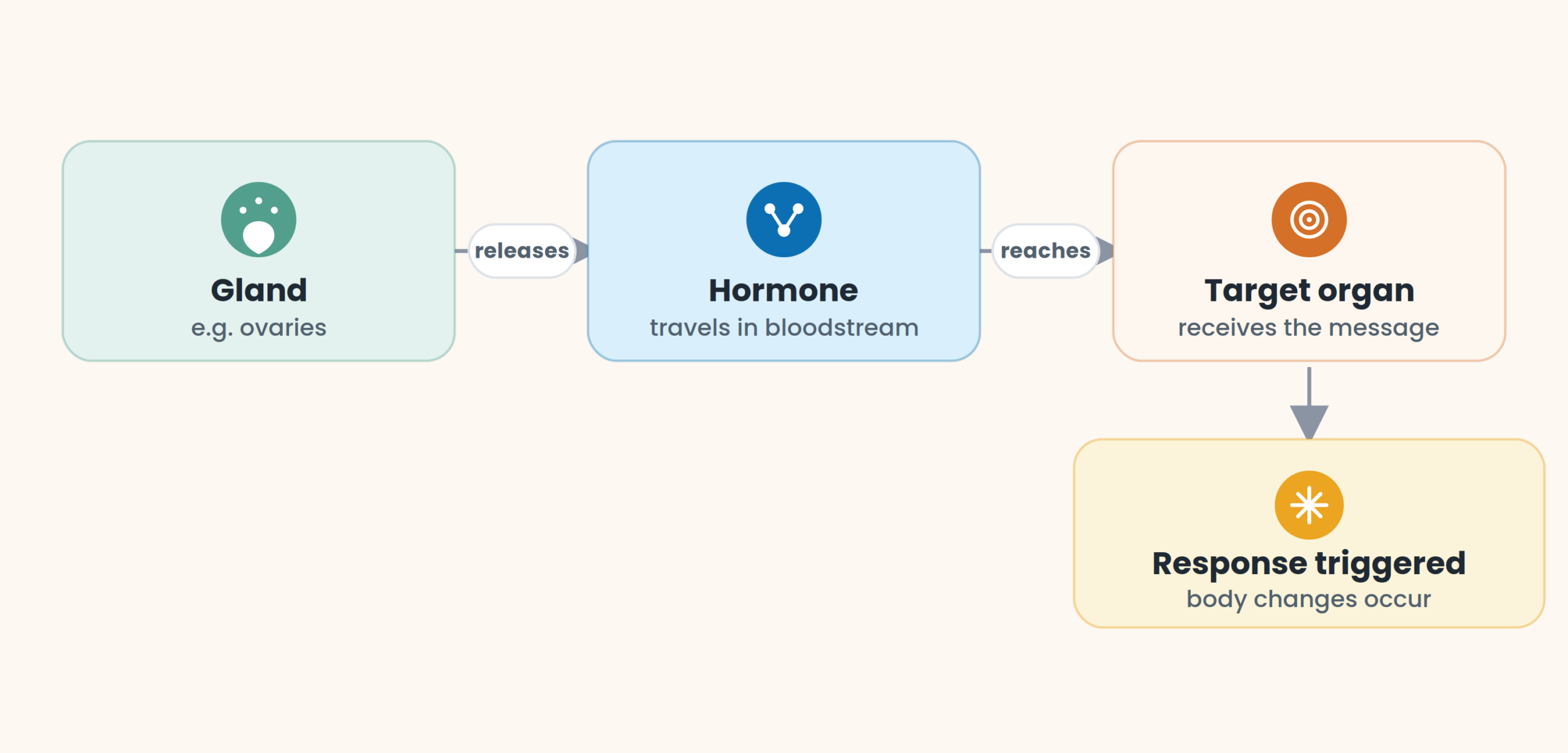
Hormones are the chemical messages sent between those departments.
Hormones are made or produced in special glands, travel through the bloodstream, and deliver instructions to specific parts of your body (your organs, muscles, skin, and other tissues) – telling them to grow, slow down, speed up, or change in some way.
There are over 50 hormones such as:
- Insulin – which controls blood sugar levels (and is produced by the pancreas)
- Growth hormone – which is required for physical growth in children, and plays a role in maintaining muscle mass and fat in adults (and is released from the pituitary gland).
- Cortisol – is essential for controlling blood pressure levels and in our stimulating our body’s response to stress (and released from the adrenal gland – which is situated just above the kidneys.
These hormones control a wide range of processes – your growth and development, metabolism, mood, sleep, bone strength, metabolism, sexual function and of course, your reproductive system (which is all the organs, glands and tissues that work together to make a baby).
Two of the most important hormones for women are oestrogen and progesterone.1
My Menopause SA
Evidence-based menopause information for South African women.
Page last reviewed: 1 March 2026
Next review due: 1 March 2027