
Mood Changes
Studies suggest that mental health symptoms, including depression, anxiety and mood swings, are commonly experienced by women during perimenopause, affecting 40% – 60% of women.
Anxiety, depression and mood swings typically peak in early perimenopause.
These symptoms often overlap with hot flushes, night sweats and sleep disruptions, which badly affect women’s quality of life.
During perimenopause in particular, women often report feeling depressed.1 This may mean that women report feeling down, sad, lacking motivation and drive, and/or being on the verge of tears.
Women also report feeling anxious during perimenopause and menopause. This means women may feel tense or nervous, panicked, ‘have your heart racing or beating fast’ and/or feeling scared or fearful for no reason.
Women also report feeling easily irritated and frustrated. Many women struggle with being easily annoyed and short-tempered.
Women may also struggle with mood swings, which is another mental health symptom that may be experienced during perimenopause in particular.
Many women often say that they do not feel like themselves during perimenopause.
As more and more studies show, there are clear links between our reproductive hormones – particularly oestrogen and progesterone – and our brain health.
Neurotransmitter systems, including serotonin, dopamine, allopregnanolone and gamma-aminobutyric acid (GABA), are affected by fluctuating levels of oestrogen, progesterone and testosterone.
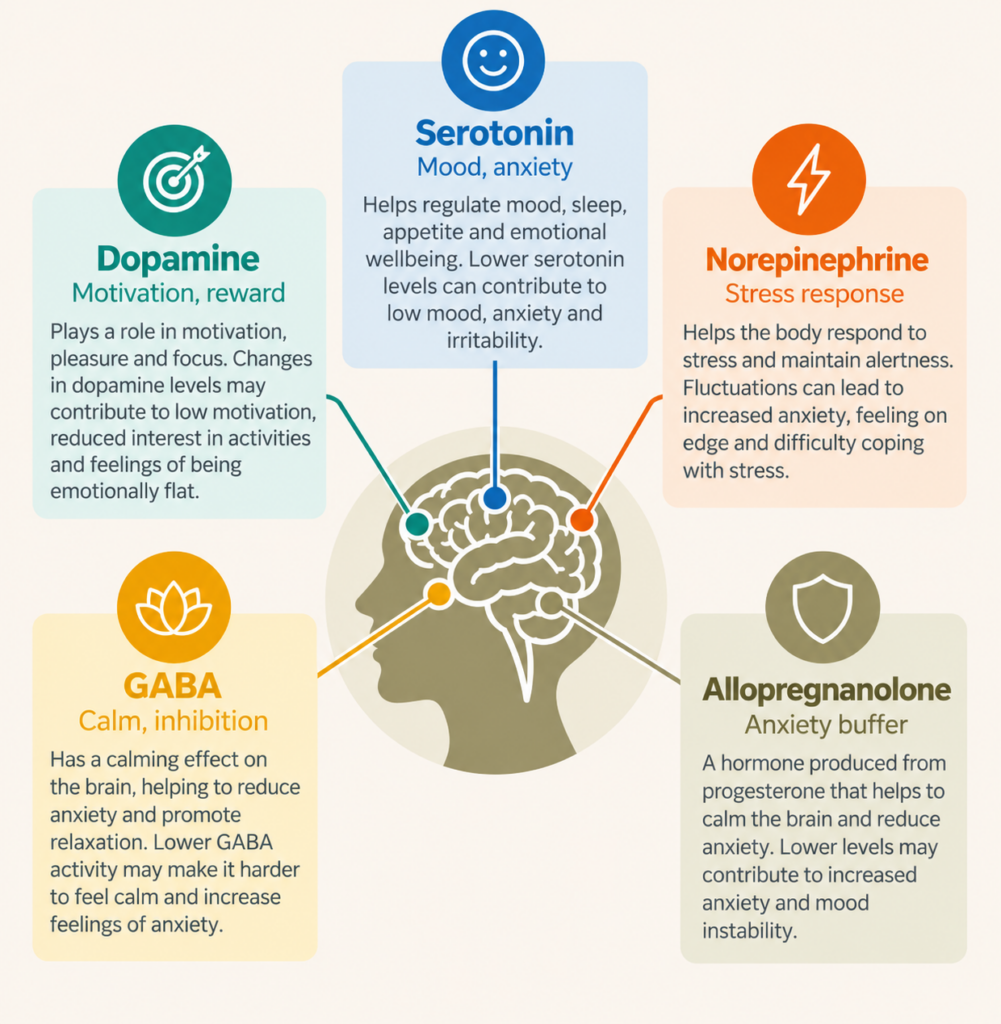
In countries like South Africa, menopause-related mental health issues are not given the attention and consideration that they require. So, it is important that women understand the possible mental health symptoms they could experience during their menopause journeys.
In many countries, hormone replacement therapy (HRT) is a first-line treatment for perimenopausal mood disturbance.
My Menopause SA
Evidence-based menopause information for South African women.
Page last reviewed: 1 March 2026
Next review due: 1 March 2027